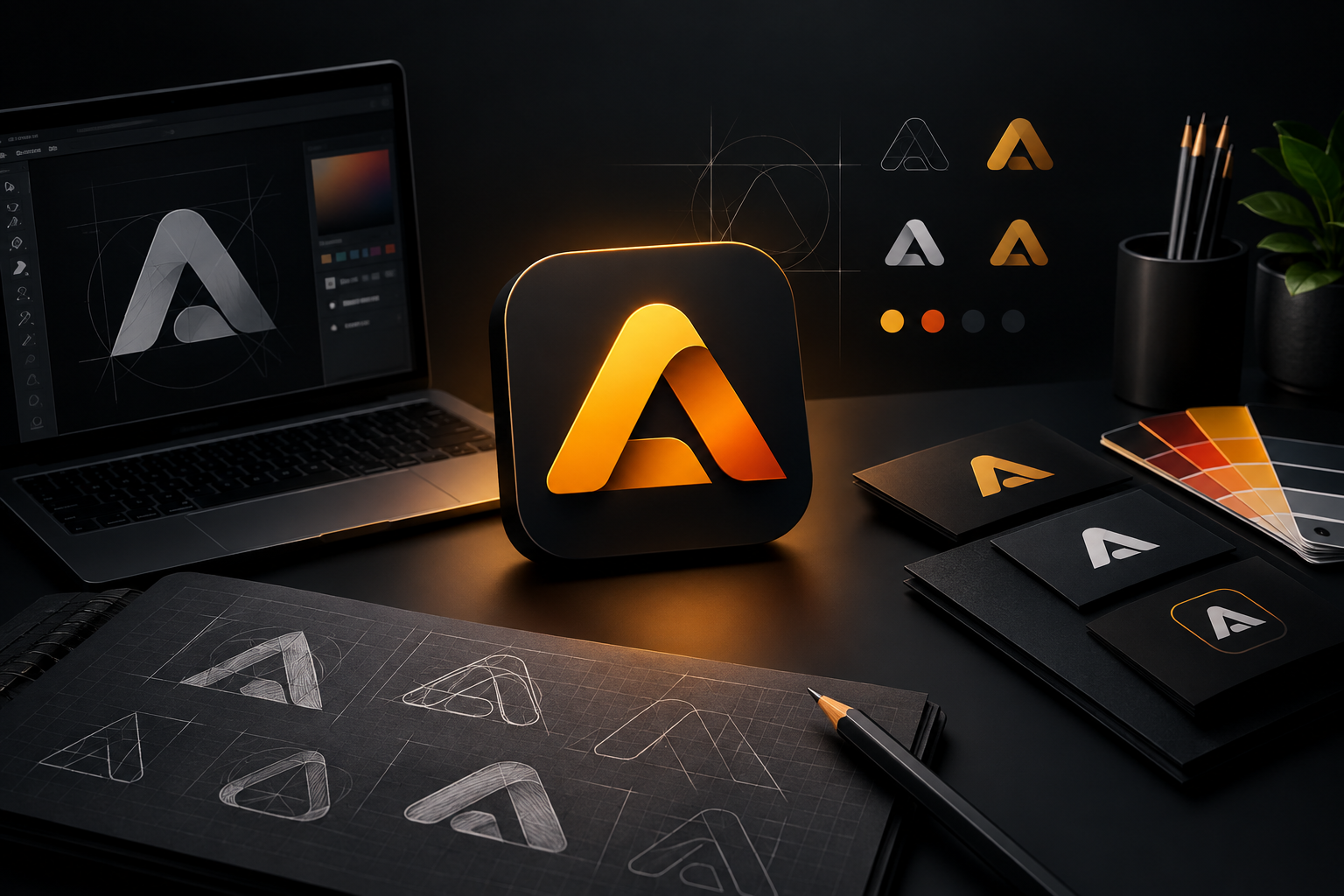
Think about a simple silver apple with a bite taken out of it. One glance and you think of clever tech, quality, and style. That is how strong a logo can be. It carries the brand without saying a word. With solid logo design skills, you turn rough business ideas into marks people remember for a long time.
Many beginners mistake logo design for simple drawing, but it requires a strategic blend of art, psychology, and technical precision. You must understand how a shape makes a person feel and how that shape functions on a tiny business card or a massive billboard. Mastering logo design skills takes you far past making things “look nice.” You learn how to solve real business problems with visuals. This tutorial takes you through the most critical skills and tools required to work as a professional logo designer, as well as how to create brands that are actually worthy of the time.
The Foundation of Professional Logo Design Skills: Concept and Strategy
Great logos start in the mind, not on the screen. Before you draw anything, you need solid research. Learn the client’s values, their competitors, and their target audience, then use those insights to shape a clear brand identity. A law firm and a toy store will never need the same visual approach.
Minimalist logo design is the key, and sharp Logo Design Skills make it possible. You learn to turn complex ideas into simple visual shorthand. Once you cut the clutter, the brand can tell its whole story in a single glance. The skill is translating complexity into simple visual shorthand. Cut the clutter, and the brand is ready to tell its entire story instantly.
Technical Mastery: Creating Versatile and Scalable Art
Once you successfully nail the concept, the job shifts entirely to flawless execution. A professional logo designer must ensure their artwork performs everywhere, from tiny icons to massive billboards. This requires technical discipline and mastering the non-negotiable skills listed below.
Scalability First: A scalable logo design demands mastery of vector graphics. Your design must maintain perfect clarity, whether on a giant billboard or a tiny favicon.
Versatile Execution: Prioritize versatile logo design. Develop the skill to ensure the logo works flawlessly in a single color (the “Receipt Test”) across all basic print, branding, and marketing.
Professional Goal: An experienced logo designer guarantees a functional logo design for businesses that performs successfully across every medium.
The Designer’s Toolkit: Essential Software to Master
While creativity fuels the idea, software brings it to life. Tools are just as critical as creativity. To truly elevate your logo design skills, you need to know the industry standards inside and out. We tackle the essential software next. Let’s simplify your decision. Our analysis shows you exactly which tool strategically fits your professional workflow.
Tool Spotlight: Adobe Illustrator
The Investment Matrix
- The Reward (Features & Help): Illustrator is the industry’s gold standard for vector creation. You get precise control over every anchor point, which lets you build clean, scalable graphics and custom typography that hold up everywhere, from tiny icons to big print jobs, even for the pickiest clients.
- Recent Improvements: Adobe recently introduced “Text to Vector” AI features, allowing you to generate vector icons and patterns using text prompts to speed up your ideation phase.
- The Risk (Cost of Inaction): If you ignore Illustrator, you lock yourself out of the professional industry. Most agencies and clients expect final source files in AI or EPS formats.
- Financial Snapshot: They offer a 7-day free trial. The single app plan costs approximately $22.99 per month.
- Expert Verdict: Essential. If you want to work as a professional logo designer, you simply must master this tool.
Tool Spotlight: Canva Pro
The Investment Matrix
- The Reward (Features & Help): Canva democratized design with its intuitive drag-and-drop interface. It provides massive libraries of ready-made fonts and shapes. It helps users, especially small businesses and entrepreneurs, create decent visuals quickly without a steep learning curve.
- Recent Improvements: They enhanced the platform by introducing new “Magic Studio” features that now handle image generation and background expansion. They also brought in much better technical support for vector exports (SVG).
- The Risk (Cost of Inaction): Relying solely on Canva limits your originality. You risk using a template that five other businesses already use, diluting the brand identity.
- Financial Snapshot: They offer a generous free version. The Pro plan starts around $14.99 per month.
- Expert Verdict: It’s fantastic for quick ideas and generating social media visuals. You should know its limits: this software does not grant the pixel-perfect precision required for complex, high-end client work.
Tool Spotlight: Procreate (iPad)
The Investment Matrix
- The Reward (Features & Help): Procreate offers the most natural drawing experience for digital artists, simulating the feel of traditional media. It helps users sketch organic, hand-drawn concepts quickly before digitizing them, which is vital for unique logo design tips.
- Recent Improvements: Look for new features like “Page Assist” for storyboarding. More importantly, they improved stabilization so artists can achieve smoother lines and perfectly crisp, detailed lettering instantly.
- The Risk (Cost of Inaction): If you prefer hand-drawn aesthetics but stick only to a mouse and keyboard, your work might feel stiff and mechanical, lacking authentic character.
- Financial Snapshot: There is no free trial, but it is a one-time purchase of $12.99. No subscription is required.
- Expert Verdict: Highly Recommended. It is the perfect companion tool for the crucial ideation and sketching phase of professional logo design.
Typography and Color Psychology: The Emotional Layer
Don’t underestimate the power of text. Logo typography is a critical skill because every font family carries emotional weight. You instantly project trust with a serif font, while a sans serif feels instantly modern. Learn to modify existing type or create custom lettering to guarantee uniqueness. Remember: the wrong font choice can undermine an otherwise professional logo designer’s expertise.
Color theory serves as your emotional tool. Colors are not just decoration; they trigger psychological responses. Red creates urgency and excitement, while blue instills trust and calm. Developing your logo design skills means knowing exactly which color palette supports the brand’s message. You must also ensure these colors have enough contrast to remain visible and accessible to everyone, including those with visual impairments.
Conclusion
True mastery in logo design hinges on one key thing: balance. You must fuse artistic flair and technical precision. This demands a mastery of brand identity design, core software, and the foundational rules of logo typography and scale.
Sharpen your logo design skills today. Grab your pen, learn the fundamentals in Illustrator, and start noticing the design successes and failures you see every day. Every great brand began with a designer who dared to create something memorable, scalable, and versatile. Take action now: the opportunity to define tomorrow’s visual identities (and your career) is waiting.